When procuring butt-weld pipe fittings for industrial pipeline systems, understanding the relevant standards is critical to ensuring safety, performance, and interchangeability. This guide provides procurement engineers with a practical overview of the standards that govern butt-weld fittings, along with a checklist for supplier evaluation and documentation requests.
Material Standards and Grades
The material of butt-weld fittings must comply with international standards to guarantee mechanical properties and corrosion resistance. Common material standards include:
- Carbon Steel: ASTM A234 WPB, WPC (for high-temperature service)
- Stainless Steel: ASTM A403 WP304, WP316, WP321 (for corrosion-resistant applications)
- Alloy Steel: ASTM A234 WP1, WP5, WP9, WP11 (for high-temperature and high-pressure service)
When specifying material, always confirm the heat number and chemical composition from the mill certificate. For critical applications, ensure the material meets Charpy V-notch impact testing requirements if specified in the project.
Dimensional Standards
Dimensional consistency is essential for proper fit-up and welding. The primary dimensional standards for butt-weld fittings are:
- ASME B16.9: Factory-made wrought buttwelding fittings (sizes from NPS 1/2 to NPS 48)
- ASME B16.28: Wrought steel buttwelding short radius elbows and returns
- MSS SP-43: Wrought stainless steel buttwelding fittings (for light-wall piping)
Key dimensions to verify include:
- Outside diameter at bevel
- Center-to-end or center-to-center dimensions
- Wall thickness (schedule)
- Bevel angle and root face tolerance
Inspection and Testing Standards
Fittings should be inspected and tested according to project specifications. Common standards include:
- ASME B16.9 also includes tolerances and marking requirements.
- ASTM A1056 (not applicable; actually, pressure testing is per ASME B16.5 for flanges, but for fittings, hydrostatic testing is not always required by standard; however, many buyers request it per ASME B31.3).
- Non-destructive testing (NDT): Radiography (RT) for critical service, ultrasonic testing (UT) for thickness verification, and liquid penetrant (PT) for surface defects.
- Visual inspection: Confirm no cracks, laps, or other defects.
Request a copy of the manufacturer’s NDT procedures and certification.
Quality Risks to Watch
Common quality issues in butt-weld fittings include:
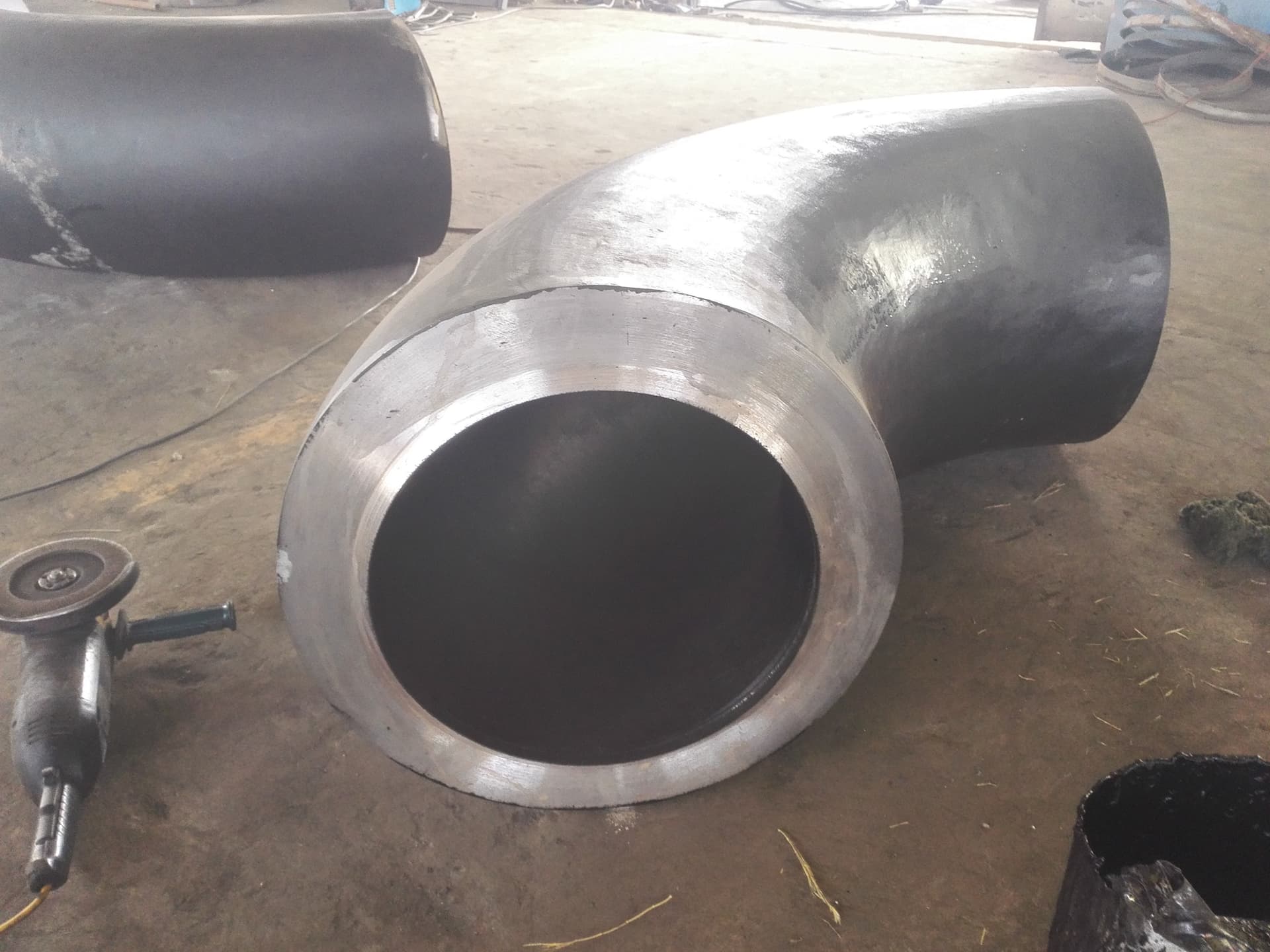
- Undersized wall thickness: Especially at the back of bends. Specify minimum wall after forming.
- Out-of-roundness: Can cause misalignment during welding.
- Bevel defects: Improper angle or lack of root face leads to poor weld quality.
- Incorrect heat treatment: Fittings made from alloy steel require proper post-weld heat treatment (PWHT).
Always request a dimensional inspection report and material certificates.
RFQ Checklist for Butt-Weld Fittings
When preparing a request for quotation (RFQ), include the following information:
- Fitting type (elbow, tee, reducer, cap, etc.)
- Nominal size (NPS) and schedule (wall thickness)
- Material grade and specification (e.g., ASTM A234 WPB)
- End type (bevel end for butt-weld)
- Quantity
- Applicable standards (ASME B16.9, etc.)
- Additional requirements: heat treatment, NDT, impact testing, pressure testing
- Delivery timeline and destination country (for export compliance)
Documents to Request Before Quotation
To assess supplier capability, ask for:
- Mill test certificate (MTC) per EN 10204 3.1 or 3.2
- Dimensional inspection report
- NDT reports (if applicable)
- Heat treatment charts
- Marking and packing procedures
- Previous delivery references for similar projects
How Hebei Haihao Group Can Help
Hebei Haihao Group manufactures butt-weld fittings in carbon steel, stainless steel, and alloy steel, complying with ASME, ASTM, and EN standards. We provide full documentation packages including MTCs and NDT reports. Contact us with your RFQ requirements for a competitive quote.
Need a quote for the products mentioned in this article?
Submit your specs and our pressure piping team will respond within one business day.
Send RFQRelated reading
 Standards
ASTM A182: Forged Alloy and Stainless Piping Components
ASTM A182 covers forged low-alloy and stainless steel flanges, fittings, valves, and parts for high-temperature service. This guide explains what buyers must specify beyond the standard, including grade, heat treatment, and dimensional standards.
 Standards