DISCLAIMER: Hebei Haihao Group does not claim participation in this project. This case study is based solely on public information and is provided for industry reference.
Project Overview
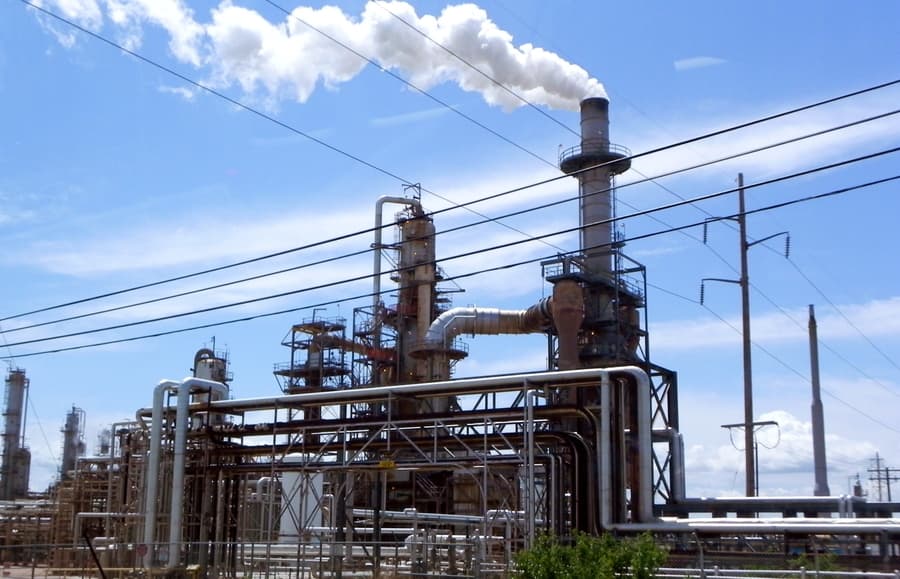
In April 2024, TotalEnergies and OQ (Oman National Oil Company) announced the final investment decision for the Marsa LNG project in the port of Sohar, Oman. The project aims to produce one million tons of liquefied natural gas (LNG) per year, primarily for the shipping sector as marine fuel. The joint venture, Marsa LNG LLC, is owned 80% by TotalEnergies and 20% by OQ.
The project's defining feature is its low-carbon design. Instead of using gas combustion to drive the liquefaction process, the plant will use electric motors. A 300 MWp solar power plant is intended to supply the equivalent of the plant's annual electricity needs. According to the operator, this design will avoid more than 200,000 tonnes of CO2 equivalent per year compared to a gas-based plant, and the plant's carbon intensity will be less than 3 kg CO2e per barrel of oil equivalent—over 90% lower than the industry average of around 35 kg CO2e/boe.
What This Means for Piping Systems
For EPC engineers and procurement managers, the Marsa LNG project highlights several important considerations for piping systems in electrified LNG plants:
- Electric motor drives replace gas turbines, which changes the utility systems. Instead of high-pressure fuel gas piping to turbines, you have large electrical power distribution and associated cooling systems. Piping for cooling water, lubricating oil, and other auxiliary systems becomes more prominent.
- Solar power integration means additional electrical infrastructure, but also potential for battery storage or power conditioning systems that may require specialized piping for cooling or thermal management.
- Cryogenic service remains central: LNG is produced at -160°C, so the main process piping must handle extreme low temperatures. Materials like 9% nickel steel, stainless steel 304/316, or aluminum alloys are typical, but the exact specifications depend on the process design.
Procurement Checks for LNG Projects
When sourcing pipe fittings and flanges for LNG or other cryogenic projects, buyers should verify:
- Material specifications: Confirm that materials meet the required low-temperature impact properties. For example, ASTM A420 for carbon steel fittings, or ASTM A403 for stainless steel. Always check the design temperature and specify accordingly.
- Standards compliance: Ensure fittings comply with ASME B16.9 for dimensions, ASME B16.25 for bevels, and MSS SP-25 for marking. For large-diameter or high-pressure lines, MSS SP-75 may apply.
- Certification: Require EN 10204 3.1 or 3.2 mill test certificates. For critical cryogenic service, 3.2 certification with third-party inspection is often mandatory.
- NDT requirements: Specify non-destructive testing such as radiography (RT), ultrasonic (UT), or dye penetrant (PT) as per project specifications. For cryogenic service, 100% RT is common for butt welds.
RFQ Inputs for Piping Components
When preparing an RFQ for pipe fittings for an LNG plant, include:
- Design code: ASME B31.3 or other applicable code.
- Service conditions: Temperature, pressure, and fluid composition.
- Material grade: e.g., ASTM A420 WPL6 for low-temperature carbon steel, or ASTM A403 WP304/316 for stainless.
- Size range and schedule: Nominal pipe size and wall thickness.
- Quantity and dimensions: Provide a bill of materials with exact dimensions.
- Testing and inspection: Specify required NDT, hydrostatic tests, and PMI.
- Documentation: Request MTCs, heat treatment charts, and traceability.
Inspection and Documentation Points
For critical cryogenic fittings, inspectors should focus on:
- Dimensional verification: Check critical dimensions such as wall thickness, end-to-end dimensions, and bevel angles against ASME B16.9.
- Material identification: Perform PMI on each heat to confirm alloy composition.
- Surface condition: Look for cracks, pits, or other defects that could compromise integrity.
- Heat treatment verification: Confirm that fittings have been properly heat-treated (e.g., normalized) to achieve required mechanical properties.
- Marking and traceability: Ensure each fitting is marked with heat number, grade, and standard, and that this matches the MTC.
Common Risks and How to Mitigate
- Material substitution: Some suppliers may offer equivalent grades that are not truly equivalent. Always verify against project specifications and require MTCs.
- Inadequate low-temperature properties: Carbon steel fittings must meet Charpy impact tests at the design temperature. Verify test results.
- Delayed delivery: LNG projects have tight schedules. Order long-lead items early and consider expediting.
- Documentation gaps: Incomplete MTCs can cause delays. Specify required documents in the RFQ and review them before shipment.
Conclusion
The Marsa LNG project is a significant step toward low-carbon LNG production. For piping professionals, it underscores the importance of understanding cryogenic service requirements and ensuring that all components meet stringent quality standards. While Hebei Haihao Group is not involved in this project, our seamless butt-welding pipe fittings and prefabricated piping solutions are designed to meet the rigorous demands of such applications. Buyers should always verify project-specific requirements and supplier capabilities.
Sources
- https://totalenergies.com/news/news/marsa-lng-lng-production-plant-low-carbon-design
- https://totalenergies.com/oman/marsa-lng-project-environmental-and-social-impact-assessment-esia
Need a quote for the products mentioned in this article?
Submit your specs and our pressure piping team will respond within one business day.
Send RFQRelated reading
Case studiesGranMorgu Suriname FPSO: Piping Procurement Reference for EPC Buyers
GranMorgu, a deep-offshore oil project off Suriname, targets 220,000 b/d by 2028. This reference outlines what piping buyers should verify and how to prepare RFQs.
Case studies