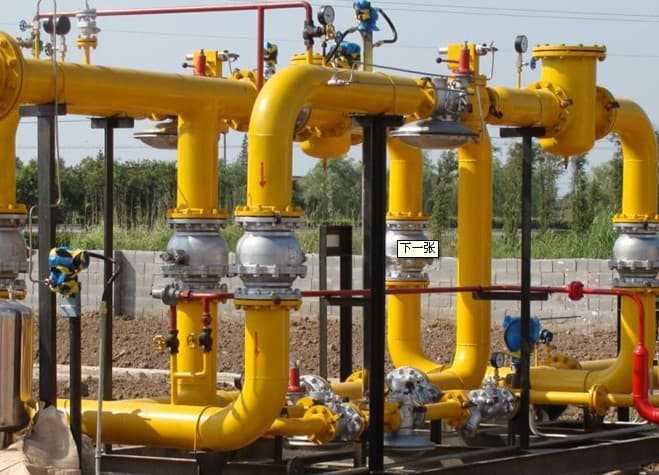
What the FID Actually Says
In October 2025, Shell announced an investment decision for the HI offshore gas development in Nigeria. The announcement confirms Shell's commitment to the project, but it does not disclose operator details, ownership percentages, first-gas timing, or any LNG linkage. For EPC engineers and procurement managers, the FID is a signal—not a specification. It tells you that a major deep-water gas project is moving forward, but it does not tell you what materials will be required, who will supply them, or when.
Shell's Nigeria overview identifies deep-water and gas activities as parts of its Nigerian portfolio. That context is useful, but it is not a project datasheet. Before you use this FID to justify inventory decisions or vendor pre-qualification, you must verify the latest official release from Shell or the project operator. The announcement may be followed by more detailed project updates, but as of now, the public record is thin.
What This Means for the Piping Supply Chain
Any offshore gas development of this scale will eventually require substantial quantities of seamless steel pipes and seamless butt-welding pipe fittings. Deep-water gas projects typically involve high-pressure, sour-service, and low-temperature conditions, which drive demand for materials like duplex stainless steel, Inconel, and carbon steel with Charpy impact testing. However, the FID announcement does not specify any of these requirements. It would be premature to assume that any particular material grade or fitting type will be dominant.
For EPC contractors and procurement teams, the FID is a trigger to start early market scanning. If you are likely to bid on packages related to this project, you should begin mapping potential suppliers for seamless pipes and fittings. But you should not issue RFQs based on assumptions. Wait for the FEED (Front-End Engineering Design) or detailed engineering outputs that will define the piping classes, material specifications, and NDT requirements.
Procurement Checks Before You Act
If you are considering positioning your company to supply or procure for this project, here are the checks you should perform:
- Verify the project scope: Confirm the operator, ownership structure, and project phases from official announcements. Do not rely on secondary sources.
- Identify the governing standards: Offshore Nigeria projects often reference international standards like ASME B16.9, ASME B16.5, ASTM A106, and ASTM A234. But the project may also adopt Nigerian or company-specific specifications. Ask for the project's technical specification list.
- Assess material requirements: Deep-water gas typically requires materials with low-temperature toughness (e.g., ASTM A420 WPL6) and sour-service resistance (NACE MR0175). Confirm these requirements from the project's material selection report.
- Check local content regulations: Nigeria has local content requirements for oil and gas projects. Understand what percentage of piping materials must be sourced locally and whether imported fittings are allowed.
- Evaluate logistics: Offshore Nigeria projects require careful planning for freight, customs clearance, and storage. Consider Incoterms and delivery schedules early.
RFQ Inputs to Prepare
When the project reaches the point where RFQs are issued, you will need to provide detailed inputs. Here is a checklist of what to prepare:
- Piping class sheets: These define the material, pressure rating, and end connections for each service.
- Line list: A list of all lines with sizes, temperatures, pressures, and fluid services.
- Isometric drawings: These show the exact routing and fitting requirements.
- Material take-off (MTO): A quantified list of pipes, fittings, flanges, and valves.
- Inspection and testing requirements: Specify NDT methods (RT, UT, PT, MT), hydrostatic testing, and PMI.
- Documentation requirements: EN 10204 3.1 or 3.2 certificates, MTCs, and traceability records.
If you are a supplier, be ready to provide your manufacturing capabilities, quality management system certifications (e.g., ISO 9001), and references from similar offshore projects. But do not claim experience on this specific project unless you have it.
Inspection and Documentation Points
For any offshore project, inspection is critical. Here are the key points to include in your inspection plan:
- Dimensional inspection: Verify that fittings meet ASME B16.9 or project-specific tolerances.
- Material verification: Perform PMI on all alloy components to confirm grade.
- Mechanical testing: Review mill test certificates for tensile, yield, and impact properties.
- Hydrostatic testing: Ensure that pipes and fittings are tested to the required pressure.
- Visual and surface inspection: Check for defects, corrosion, and weld quality.
- Marking and traceability: Confirm that all items are marked per MSS SP-25 and traceable to the MTC.
Documentation should be reviewed by a qualified inspector before shipment. For critical services, consider third-party inspection by SGS, BV, TUV, or DNV.
Common Risks to Manage
- Overclaiming: Do not assume that the FID guarantees any specific supply contracts. The project may be delayed, scaled back, or cancelled.
- Speculation: Avoid making procurement decisions based on unverified project details. Wait for official engineering documents.
- Local content compliance: Failing to meet Nigerian local content requirements can disqualify you from bidding.
- Quality issues: Offshore environments demand high-quality materials. Cutting corners on inspection can lead to catastrophic failures.
- Supply chain lead times: Seamless pipes and fittings for offshore projects often have long lead times. Plan early, but only after requirements are defined.
How to Stay Informed
To stay ahead of the supply-chain signal, monitor official announcements from Shell and the Nigerian government. Subscribe to industry news sources that track oil and gas projects in West Africa. Attend industry conferences and webinars where project updates are shared. And maintain relationships with potential suppliers who can provide early insights into capacity and pricing.
For now, the HI FID is a positive indicator for the offshore gas sector in Nigeria. But it is not a green light for speculative procurement. Use it as a trigger to prepare, not to commit.
Sources
- https://www.shell.com/news-and-insights/newsroom/news-and-media-releases/2025/shell-invests-in-nigeria-offshore-gas-development.html
- https://www.shell.com/news-and-insights/shells-perspectives-on-key-topics/shells-activities-in-nigeria.html
Need a quote for the products mentioned in this article?
Submit your specs and our pressure piping team will respond within one business day.
Send RFQRelated reading
 Industry news
Manatee Gas FID in Trinidad and Tobago: A Source-Checked LNG Feedgas Update
Shell's July 2024 FID for the Manatee gas development in Trinidad and Tobago signals continued investment in LNG feedgas. This update outlines what is verified, what remains to be checked, and how EPC buyers can align procurement with evolving project timelines.
 Industry news