

The Two Questions Every First-Time China Buyer Must Answer Before Sending an RFQ
- Is this a real manufacturer or a trading company?
- Does the factory hold the certifications my project actually requires (not just "ISO 9001 wallpaper")?
If you can't answer both with confidence, sending an RFQ is premature.
1. Certification Map — What Each One Really Proves
| Certification | What it proves | What it does NOT prove |
|---|---|---|
| ISO 9001:2015 | Quality management system in place | Product capability for any specific grade |
| PED 2014/68/EU + AD 2000 W0 | Legally allowed to sell pressure equipment in EU; check Notified Body number on certificate (e.g. 0036 TÜV SÜD, 0035 TÜV Rheinland) | API or NACE compliance |
| API 6A / 6D / Q1 | Required for upstream oil & gas; check API monogram licence number on api.org/composite-list | PED or NACE compliance |
| PED 4.3 Material Approval | Approved for the specific grade (e.g. P265GH, P355NH) | Other grades — each is approved separately |
| NORSOK M-650 | Qualification for duplex / super-duplex manufacturer (Statoil/Equinor projects) | Carbon steel quality |
Lesson: "We have ISO 9001" is the bare minimum, not a differentiator. The certifications that matter are those tied to your specific project.
2. Pre-Audit Desktop Screening (Do This Before Flying Out)
Before booking any flight or scheduling a video audit:
- [ ] Cross-check business licence on China's National Enterprise Credit Information Publicity System (gsxt.gov.cn) using the company's registered name
- [ ] Verify registered capital, year of establishment, registered scope ("生产" = manufacturing, "销售" = sales/trading only)
- [ ] Request scans of the API / PED certificates and verify on the issuing body's online register (not the supplier's website)
- [ ] Request 3 reference customers in your region; call them yourself (don't email — emails can be impersonated)
- [ ] Search the company name in Chinese on Baidu News for any public regulatory issues
- [ ] If listed on Alibaba, check trade history (years on Alibaba, transaction volume — public on the storefront)
A surprising number of first-time-buyer headaches end at this step. If the registered scope says "销售" only, walk away.
3. On-Site (or Remote Video) Factory Audit Checklist — 9 Sections
Section 1 — Document Control
- Latest revisions of ASME B16.9 / B16.5 / B16.34 physically on shop floor (not in a locked office)
- Procedure manuals printed in Chinese for the operators
Section 2 — Incoming Material Control
- Mother pipe / plate stored by heat
- Each heat has a painted heat number visible from the aisle
- Receiving inspection records (random spot-check 3 lots)
Section 3 — Production Traceability
- Every fitting / flange must carry a heat number from receiving to shipping
- Walk a sample backwards from FG (finished goods) warehouse to incoming
- The heat number on the fitting body matches the receiving log entry
Section 4 — Forming Equipment
- Hot / cold forming presses, induction bending, hydraulic expanders
- Equipment capacity matches the order size range
- Recent calibration certificates for tonnage indicators
Section 5 — Heat Treatment
- In-house furnace with calibrated thermocouples (cal certificate < 12 months)
- Chart recorder operating
- Ask to see last week's charts (random check that they match production records)
Section 6 — NDT
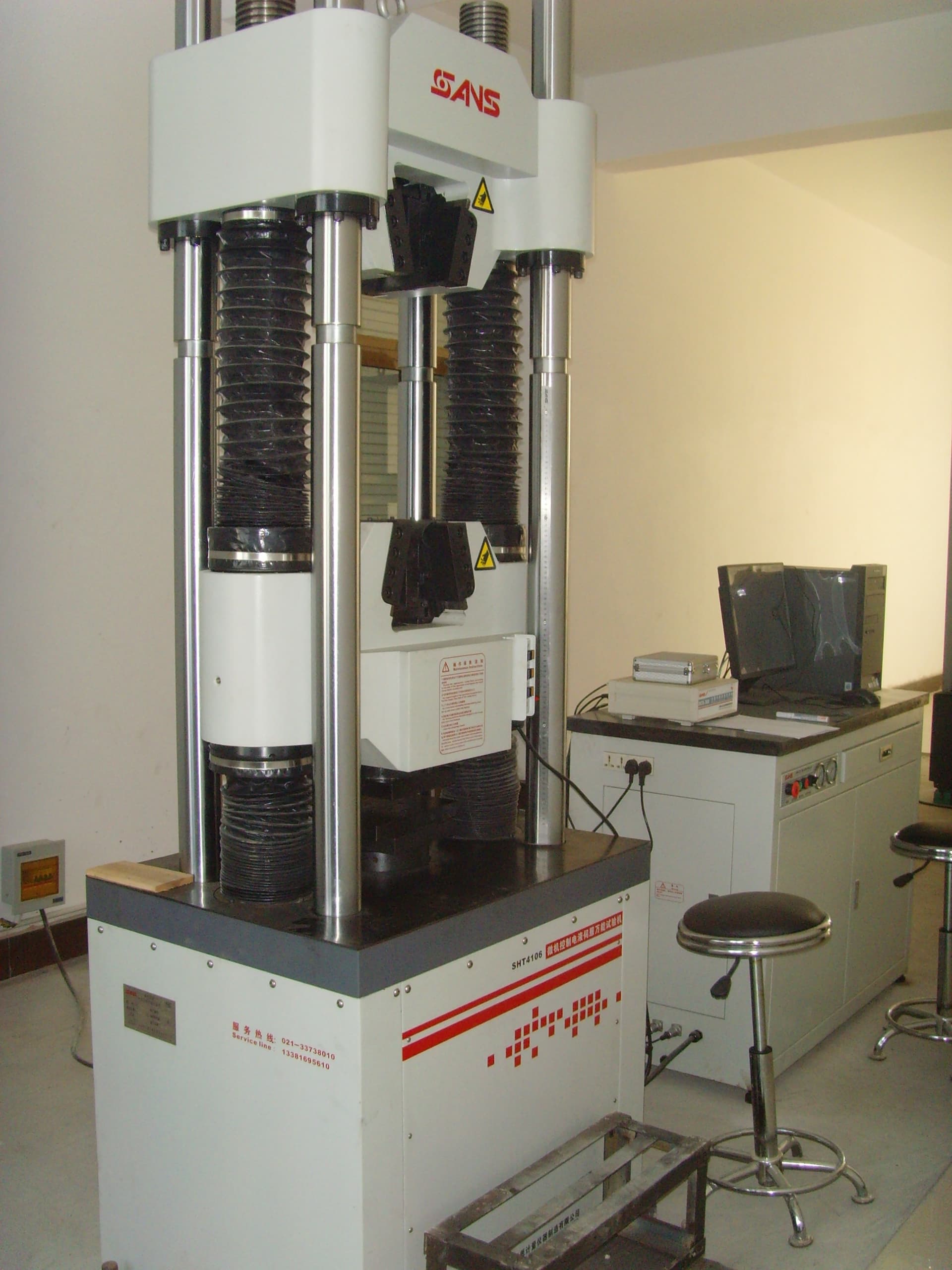
- SNT-TC-1A or ISO 9712 Level II technicians (verify certificates)
- PT / MT / UT / RT equipment with calibration tags (each tag traceable to a national standard)
- For RT: lead-shielded room or off-shift schedule (radiation safety)
Section 7 — Dimensional Inspection
- Calibrated calipers, micrometers, UT thickness gauges
- Each gauge carries a cal sticker traceable to a national standard
- Reference blocks / step gauges available for UT calibration
Section 8 — PMI (Positive Material Identification)
- XRF or OES on-site for stainless / alloy / duplex
- PMI procedure written and applied
Section 9 — Final QC and Packing
- Dedicated inspection bay (not in the corner of the warehouse)
- ISPM-15 fumigated wood for crates
- Shrink-wrap / VCI paper as appropriate
4. Trading-Company Red Flags
A purported "factory" is actually a trading company if you see:
- "Factory" address is an office tower or residential block (Google Street View it before the audit)
- Cannot show forming / heat-treatment equipment live on video call (excuse: "today's safety check")
- Same product photos appear on multiple Alibaba storefronts (reverse image search)
- MTCs always issued by the same upstream mill regardless of the grade you order
- Refuses to allow third-party inspector (SGS / BV / TÜV) site access
- "Factory tour" in their video is suspiciously short or all warehouse, no production floor
5. The RFQ Template — Every Field That Must Be Filled to Get a Comparable Quote
Without these fields, suppliers will quote different things and your comparison is meaningless.
For Each Item
| Field | Example |
|---|---|
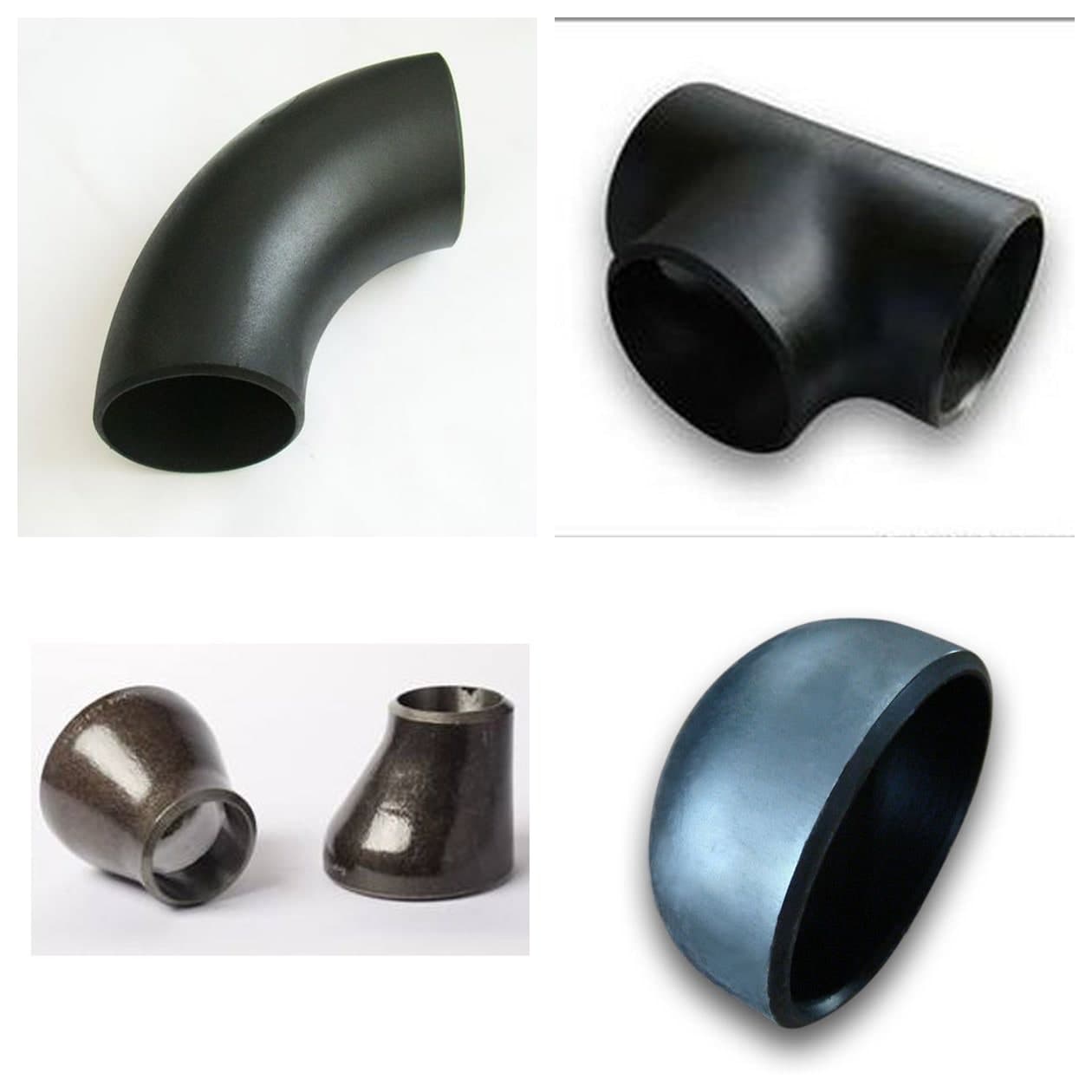
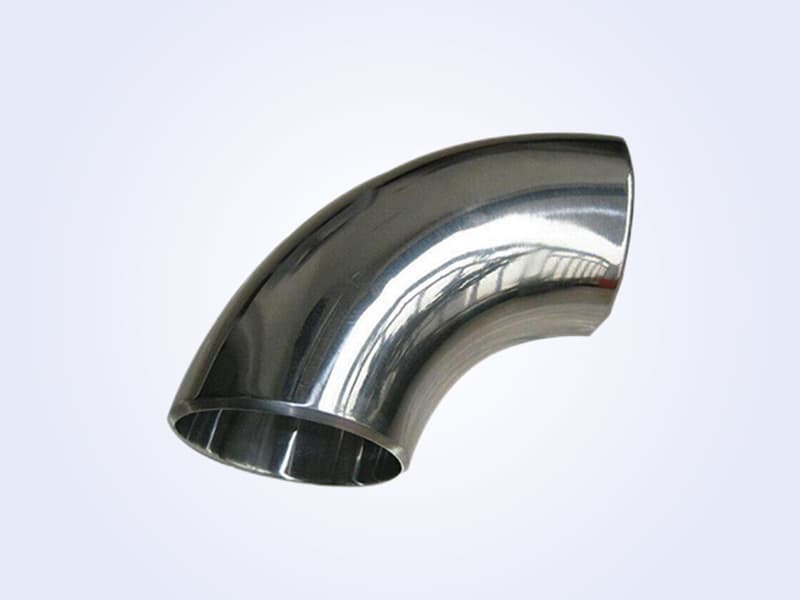
| Item description | "90° LR Elbow, BW, NPS 6, SCH 40, ASTM A234 WPB, ASME B16.9, ends per B16.25" |
| Quantity per size + total | 50 pcs / 200 pcs / etc. |
| Standard | ASME B16.9 / MSS SP-43 / EN 10253-2 / DIN 2605 — pick one |
| Material grade + applicable ASTM/EN spec | A234 WPB |
| End preparation | BW / SW / threaded / flanged |
6. Comparing Quotes — What to Normalise Before Deciding
A common mistake: ranking quotes by FOB price alone. Real comparison:
- Strip out items not specified. Some suppliers add "free third-party inspection" but exclude PMI fee or hardness testing fee.
- Convert all quotes to the same Incoterm (CIF Rotterdam, etc.) for apples-to-apples.
- Score on technical compliance first, price second. Reject any quote that "alternatives" your specified standard (e.g. you asked A234 WPB, they quoted "equivalent grade S235JR" — not the same thing).
- Add a risk weighting for each supplier:
- First-time vs proven supplier
- PED / API approval status
- Distance from the buyer's region (logistics cost + lead time)
- Reference customers in your specific industry segment
- Get a 3-quote minimum. A single "incredible price" without comparators is a red flag.
7. The First PO — Derisking the Relationship
For your first order with a Chinese supplier:
- [ ] Start with one container or one critical-path lot, not the full project order
- [ ] Mandate third-party inspection (SGS, BV, TÜV Rheinland, Intertek) at the supplier's cost on the first order
- [ ] Hold 5-10% retention payable 30 days after site receipt acceptance
- [ ] Specify damages clause for delivery delay (e.g. 0.5% / week, capped at 5% of PO value)
- [ ] Visit the factory before paying the deposit, even by video — see the actual production line for your item
- [ ] Document the agreement carefully — Chinese law allows interpretation of "口头承诺" (verbal commitments) but only in writing has any practical recourse value
If the first lot ships clean and on time, you have built the foundation for a long-term relationship.
This article is provided as a procurement reference. Buyers should adapt the checklist to their own project, jurisdiction, and risk tolerance.
Related Products
For physical supply of the specs discussed above, refer to the relevant Hebei Haihao product categories:
Or browse the full product catalogue and filter by ASTM / ASME / EN / GB standards, material grades, and size ranges.
Further Reading
Next Steps
- This article is a procurement reference; all standard numbers, chemistry limits, and process parameters defer to the latest published edition
- For project RFQs, submit your specs via the inquiry form; we respond within 4 business hours
- Factory certifications and inspection capability are listed on the certificates page
Need a quote for the products mentioned in this article?
Submit your specs and our pressure piping team will respond within one business day.
Send RFQRelated reading
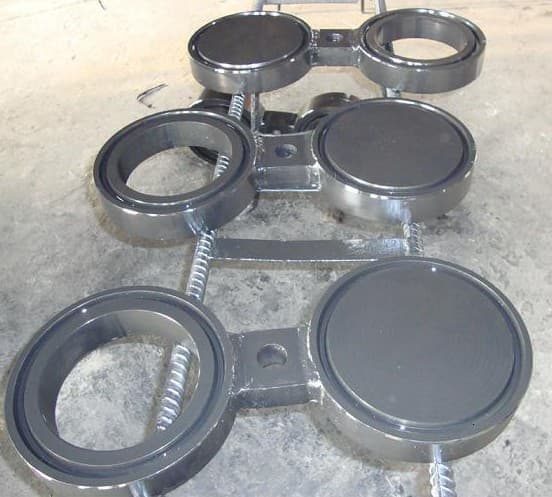 Buyer guide
Orifice Flange RFQ Checklist: Class, Type, Taps and Documents
Specifying orifice flanges requires more than a standard flange RFQ. This checklist covers ASME B16.36 scope, class/type limits, tap details, and documentation gaps to verify before ordering.
 Buyer guide