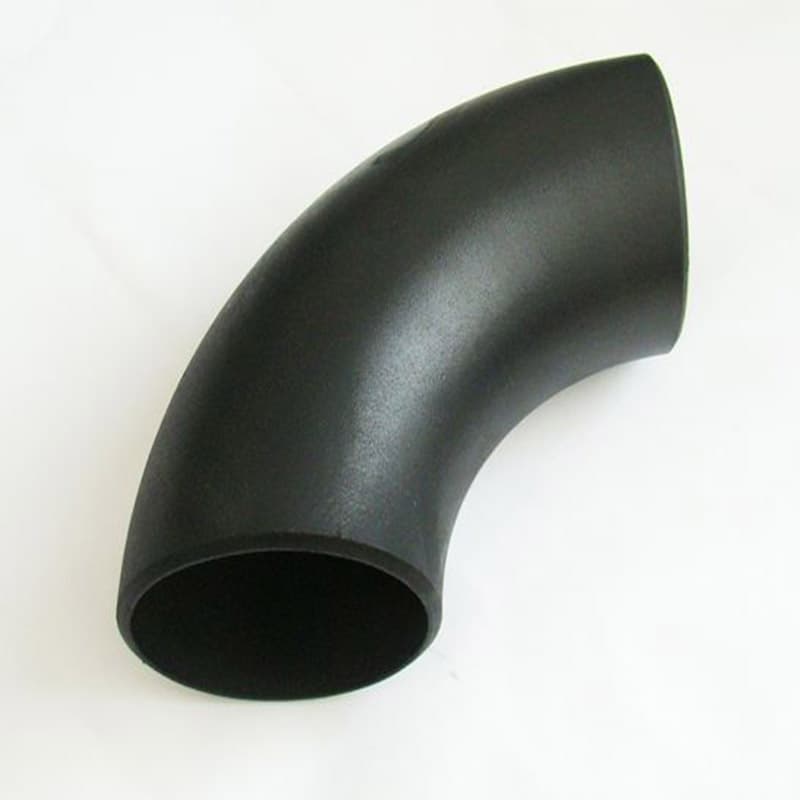
Scope and Application
ASTM A403/A403M is the standard specification for wrought austenitic stainless steel fittings used in pressure piping applications. It covers fittings manufactured from forgings, bars, plates, or seamless or welded tubular products, formed by processes such as hammering, pressing, piercing, extruding, upsetting, rolling, bending, fusion welding, or machining. The standard applies to fittings for pressure service, but it does not cover cast steel fittings—those are addressed by ASTM A351/A351M, A743/A743M, and A744/A744M.
For EPC engineers and procurement managers, specifying the correct ASTM A403 grade and class is critical to ensure mechanical properties, corrosion resistance, and compliance with project codes. This guide explains the grade and class system, what to verify, and common pitfalls.
Grade Designations: WP vs. CR
ASTM A403 grades are designated with a prefix WP or CR, depending on the dimensional and rating standard they conform to:
- WP (Wrought Piping) – used when fittings are manufactured to ASME B16.9 (factory-made wrought buttwelding fittings) or other ASME dimensional standards.
- CR (Corrosion Resistant) – used when fittings conform to MSS SP-43 (wrought stainless steel butt-welding fittings) or other MSS standards.
Common grades include WP304, WP304L, WP316, WP316L, WP321, WP347, and their CR equivalents. The prefix does not indicate material grade; it only indicates the dimensional standard. For example, WP316 and CR316 are both austenitic stainless steel type 316, but they are manufactured to different dimensional standards.
Classes for WP Grades
For each WP grade, ASTM A403 defines several classes that indicate the method of construction (seamless or welded) and the extent of nondestructive examination (NDE). The classes are summarized in Table 1 of the standard. Common classes include:
- Class S – Seamless construction, no radiography required.
- Class W – Welded construction, no radiography required.
- Class WX – Welded construction, 100% radiography required.
- Class WP – Welded construction, 100% radiography and additional NDE.
Note: CR grades do not have classes; they are covered by MSS SP-43, which has its own requirements.
When specifying, you must state the exact class, as it affects inspection requirements and cost. For example, a Class WX fitting requires full radiography of welds, which is more expensive than Class W.
Heat Treatment and Testing
All fittings under ASTM A403 must undergo heat treatment. The standard specifies that fittings shall be heat-treated to meet the required mechanical properties. For austenitic stainless steels, this typically involves solution annealing (heating to a high temperature and rapid cooling) to restore corrosion resistance and ductility.
Chemical and product analyses are required to verify composition for carbon, manganese, phosphorus, sulfur, silicon, chromium, molybdenum, and titanium. Tension tests are performed on the fitting material to determine yield and tensile strength. Visual examination is required for surface discontinuities, checks, and mechanical marks.
Procurement Checks and RFQ Inputs
When procuring ASTM A403 fittings, include the following in your RFQ:
- Exact grade (e.g., WP316L) – do not use generic terms like "stainless steel."
- Class (e.g., Class W, WX) – specify NDE requirements.
- Dimensional standard – ASME B16.9 or MSS SP-43, and the edition (e.g., ASME B16.9-2024).
- Heat treatment – confirm solution annealing temperature and time.
- Testing requirements – chemical analysis, tensile tests, and any additional NDT (e.g., radiography, dye penetrant).
- Marking – per MSS SP-25 or as specified.
- Certification – require EN 10204 3.1 or 3.2 material test certificates.
Inspection and Documentation Points
During inspection, verify:
- Material test certificates – ensure they reference ASTM A403 and the correct grade/class.
- Heat treatment records – confirm solution annealing was performed.
- Dimensional checks – per ASME B16.9 or MSS SP-43, including wall thickness, diameter, and end bevel.
- Surface inspection – look for cracks, laps, or other defects.
- NDE reports – if Class WX or higher, verify radiography results.
Common Risks and How to Avoid Them
- Grade substitution – Do not assume low-carbon grades (L) from XRF alone; require chemical analysis.
- Class confusion – Ensure the class is specified; otherwise, you may receive a lower NDE class than required.
- Dimensional standard mismatch – WP and CR fittings have different tolerances; specify the correct one.
- Heat treatment omission – Some suppliers may skip solution annealing; verify via records.
Why This Matters for Your Project
Using the correct ASTM A403 grade and class ensures the fittings meet pressure and corrosion requirements. For example, in chloride environments, 316L is preferred over 304L. The class determines inspection rigor, which is critical for safety in high-pressure systems.
For a full range of buttweld fittings and flanges, visit our products page. For a detailed quote, use our inquiry form.
Sources
- https://www.astm.org/a0403_a0403m-22b.html
- https://www.asme.org/codes-standards/find-codes-standards/b16-9-factory-made-wrought-buttwelding-fittings
Need a quote for the products mentioned in this article?
Submit your specs and our pressure piping team will respond within one business day.
Send RFQRelated reading
 Standards
ASTM A694 Forgings for High-Pressure Transmission Service
ASTM A694/A694M covers forged or rolled steel flanges, fittings, valves, and parts for high-strength transmission-service pipe. This guide explains grades, procurement checks, and inspection points for EPC buyers.
 Standards