Why this matters
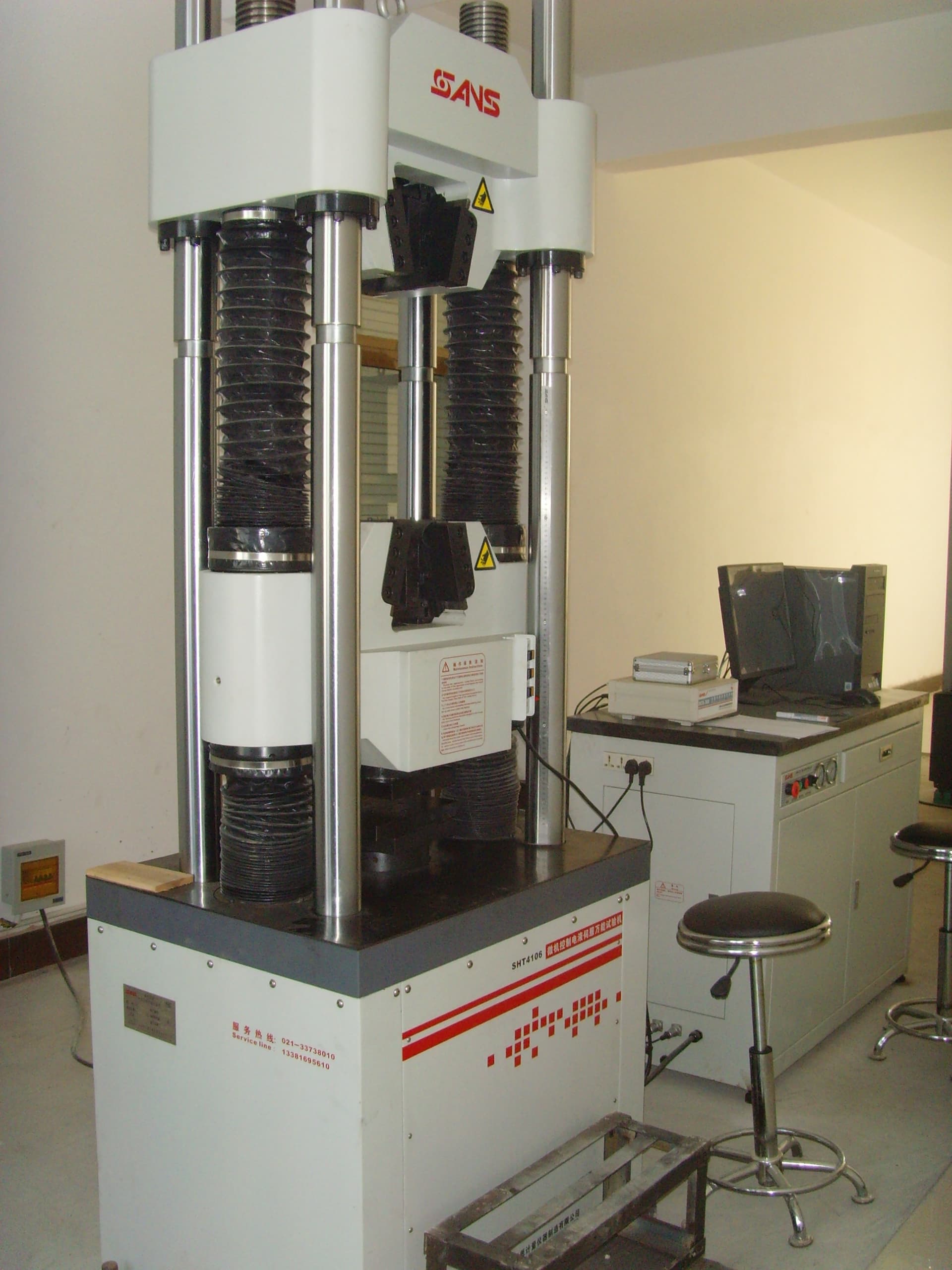
Hardness is the simplest mechanical proxy for strength, microstructure quality, and (in sour service) susceptibility to sulfide stress cracking. For forged fittings and flanges, four hardness tests dominate: Brinell, Vickers (macro and micro), Rockwell, and the portable UCI method. Each is governed by an ASTM E-series standard and each has a specific window of use. Buyers who pick the wrong method end up with results they cannot defend at acceptance. This hardness testing forgings guide explains Brinell, UCI, Vickers, and Rockwell so the buyer specifies the right test the first time.
A correct hardness testing forgings strategy combines bench-top precision with portable verification.
Method-by-method explanation
Brinell — ASTM E10. A 10 mm tungsten-carbide ball is pressed into the surface under loads of 500–3000 kgf. The indent diameter is measured optically and converted to a Brinell Hardness Number (HBW). The large indent averages over coarse forging microstructure, which is why Brinell is the default for forged fittings, flanges, and castings. Typical maximum for sour service per NACE MR0175 is 250 HBW for carbon steel parent metal.
Vickers — ASTM E92 (macro) and ASTM E384 (micro). A diamond pyramid (136° angle) leaves a square indent under loads from 1 gf (microhardness) to 120 kgf. The diagonal is measured optically. Vickers is preferred for traverses across welds (HAZ surveys) and for thin sections — NACE MR0175 specifies HV 10 or HV 5 for weldment hardness traverses.
Rockwell — ASTM E18. A diamond cone (Brale, scale C) or steel ball (scale B) is pressed under a minor + major load; the depth difference reads directly in HRC or HRB. Fastest of the bench tests, no optical measurement needed. NACE MR0175 expresses the carbon-steel limit as 22 HRC for parent metal. HRC is ill-suited to coarse forging microstructure because the small indent can hit a single grain.
UCI — ASTM A1038. Ultrasonic Contact Impedance: a Vickers diamond on the tip of a vibrating rod. When pressed against the surface, the contact area shifts the rod's resonance frequency; the instrument converts the shift into a Vickers number. Portable, leaves a tiny indent, ideal for in-situ testing of installed flanges or large forgings that cannot fit a bench tester. Surface preparation (grinding to ~Ra 1.6) is critical; UCI is reference-corrected against a known sample.
When to use each on forgings
- Bulk forging body, finished part, lab QC: Brinell (E10).
- Weldment HAZ survey for sour service: Vickers HV 10 or HV 5 (E92), per NACE MR0175.
- Quick acceptance test on small parts: Rockwell C (E18).
- Field verification on installed/oversized parts: UCI (A1038), correlated to Vickers.
- Thin coatings, plating, case depth: Microhardness (E384).
Common buyer mistakes
- Specifying "22 HRC" on a coarse forging where the indent lands inside a single ferrite grain and reads low.
- Confusing HBW (tungsten-carbide ball, ASTM E10) with the older HBS (steel ball) — modern Brinell is HBW.
- Accepting a single hardness reading; ASTM E10 requires the average of multiple indents at separated locations.
- Using UCI without a calibration block of similar material — wrong block, wrong reading.
- Ignoring surface condition: scale, decarb layer, or paint all bias hardness low.
Buyer checklist
- [ ] Method named with its ASTM standard
- [ ] Number of indents per piece stated (e.g., 3 per surface)
- [ ] Sample plan: per piece or per heat
- [ ] Surface preparation requirement (e.g., decarb removed to 0.5 mm)
- [ ] For sour service: Vickers HV 10 traverse across weld + HAZ + base
- [ ] Calibration block reference for UCI
- [ ] Acceptance limit cited from project spec or NACE MR0175
Sample PO clause
"Hardness testing per ASTM E10 (Brinell HBW) on each forged flange body, minimum 3 indents at 120° separation on the back face. Maximum 197 HBW for ASTM A105 carbon steel parent metal. For sour service items per NACE MR0175 / ISO 15156-2, perform Vickers HV 10 traverse across weld, HAZ, and parent metal; maximum 250 HV 10. UCI per ASTM A1038 acceptable for field verification with calibration block of matching material."
Our forged flanges and non-standard forgings ship with Brinell results on the MTC; sour-service seamless butt-welding pipe fittings include Vickers traverses. Request a sample report from our inquiry page or browse archived test reports in the certificates library.
Sources
- ASTM E18 Rockwell (open PDF): https://repositorio.uisek.edu.ec/bitstream/123456789/2680/3/ASTM_E18-15.pdf
- TestMetals — E10 / E18 / E92 / E384 overview: https://www.testmetals.com/hardness-testing
- Quality Magazine — portable hardness incl. UCI: https://www.qualitymag.com/articles/91267-portable-hardness-testing-methods
- NextGen overview: https://www.nextgentest.com/blog/brinell-rockwell-vickers-or-microhardness-which-test-makes-sense-for-your-application/
- NACE MR0175 hardness rule (Octalsteel summary): https://www.octalsteel.com/wp-content/uploads/2017/10/NACE-MR0175-ISO15156-specification.pdf
Need a quote for the products mentioned in this article?
Submit your specs and our pressure piping team will respond within one business day.
Send RFQRelated reading
 Buyer guide
Metallic vs Nonmetallic Flange Gaskets: A Buyer Selection Guide
Choosing between metallic and nonmetallic flange gaskets requires more than a quick comparison. This guide explains the ASME standards that govern each family, the critical factors to evaluate, and the procurement checks that prevent costly joint failures.
 Buyer guide