Why this matters
Heat treatment determines whether a buttweld fitting reaches its specified tensile, yield and toughness numbers, and whether it stays inside the allowable hardness window for sour service. ASTM A234 leaves the choice between annealing, normalizing, normalizing and tempering, or quench and temper open to the manufacturer for many size and grade combinations, which is exactly why procurement engineers need to understand the trade-offs.
Key technical facts
For ASTM A234 (covering WPB, WPC, WP1, WP5, WP9, WP11, WP12, WP22 and similar carbon and low-alloy buttweld fittings):
- Hot-formed fittings finished above approximately 980 degC (1800 degF) shall be subsequently annealed, normalized, or normalized and tempered.
- WPB and WPC fittings above NPS 12 produced by locally heating the stock for forming shall be subsequently annealed, normalized, or normalized and tempered.
- Cold-formed WPB fittings whose final forming is below approximately 620 degC (1150 degF) shall be normalized, or stress-relieved at 595-690 degC (1100-1275 degF).
For low-alloy grades (WP11, WP22, WP91), the standard typically requires normalizing and tempering; quench and temper is also permitted with documented temperatures.
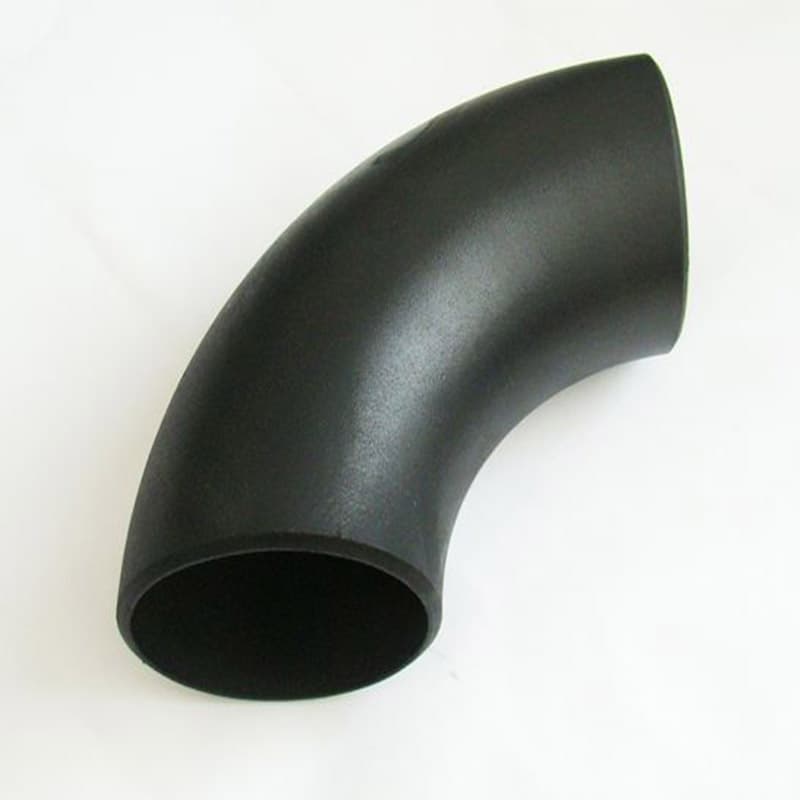
Decision matrix
| Heat treatment | Effect on grain | Hardness trend | Best fit |
|---|---|---|---|
| Annealing | Coarsens, very stable | Lowest | Maximum machinability |
| Normalizing (N) | Refines uniformly | Moderate | General A234 WPB / WPC service |
| Normalizing & Tempering (N&T) | Refines + stress relief | Moderate, more stable | Cr-Mo grades, sour service |
| Quench & Temper (Q&T) | Fine, martensitic-tempered | Highest, tightest scatter | High-strength or thick-wall fittings |
For seamless butt-welding pipe fittings destined for general carbon steel piping, normalizing is usually adequate. For pipe bends in Cr-Mo service, N&T is the safer default. For thick wall, high-strength offshore service, Q&T is sometimes preferred to keep mechanical scatter narrow.
Common procurement mistakes
- Assuming all A234 WPB fittings are normalized. Small cold-formed fittings may have only stress relief; ask the supplier for the actual condition.
- Specifying Q&T for WPB without raising the price expectation. Q&T is permitted but adds processing cost and lead time.
- Mixing heat-treatment lots in a single batch. Mechanical and hardness data must be lot-traceable.
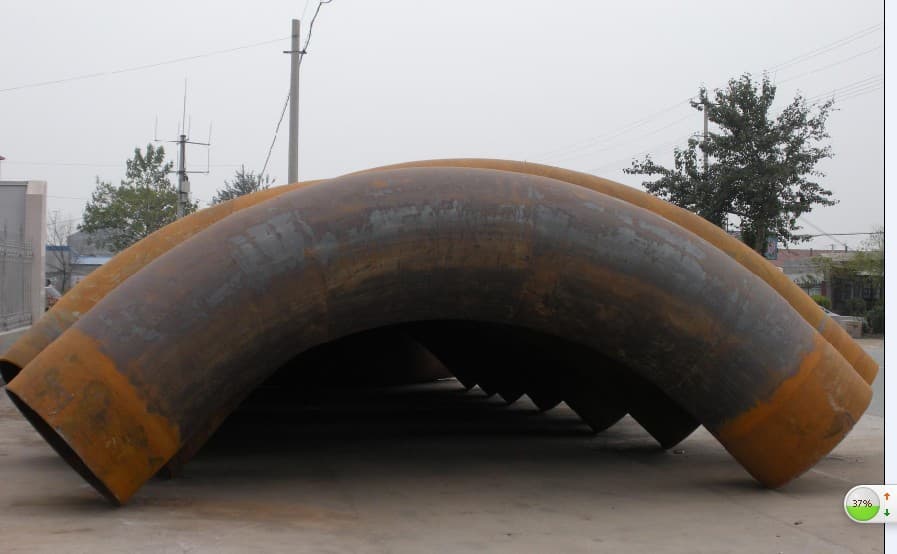
- Skipping the post-bending heat treatment for pipe bends. Hot-induction bends typically need a re-normalize, sometimes followed by tempering for Cr-Mo grades.
- Forgetting to check hardness after PWHT. Site PWHT can drop hardness below the minimum tensile-correlated value if poorly controlled.
Buyer checklist
- Specify the required heat treatment condition (N, N&T, or Q&T) on the PO, even when the standard allows the supplier to choose.
- Require the actual furnace cycle (temperature, soak time, cooling medium) on the MTC.
- For Cr-Mo grades, require N&T as a minimum and tempering temperature within a defined window.
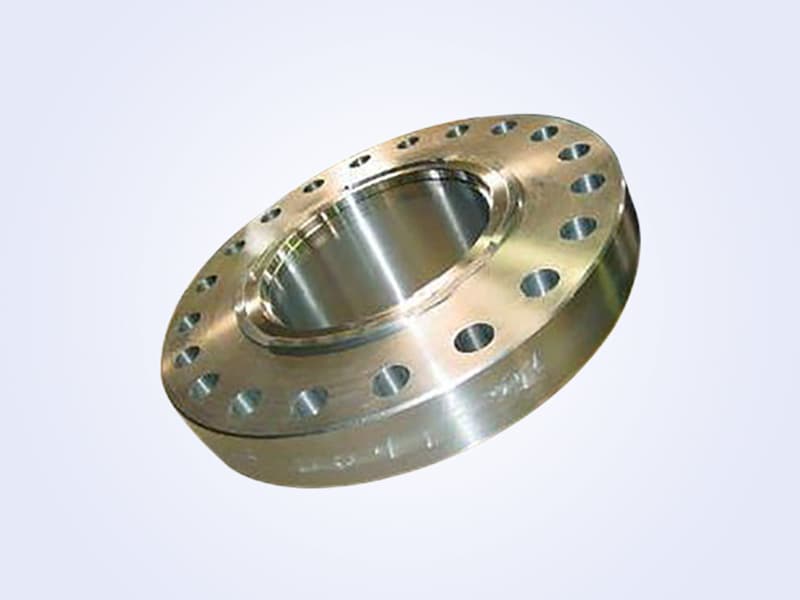
- For pipe bends and forged flanges, match the matching pipe heat treatment so PWHT planning is consistent.
- Cross-check certificates for the supplier's heat treatment furnace calibration records.
- Send your enquiry with explicit heat treatment requirements through our inquiry page.
Sources
- https://www.octalpipefittings.com/astm-a234/
- https://www.octalsteel.com/astm-a234-steel-pipe-fittings/
- http://www.metalspiping.com/astm-a234-carbon-steel-pipe-fittings.html
Need a quote for the products mentioned in this article?
Submit your specs and our pressure piping team will respond within one business day.
Send RFQRelated reading
TechnicalDuplex 2205 vs Super Duplex 2507 Fittings for Sour and Seawater
How to choose between Duplex 2205 and Super Duplex 2507 buttweld fittings using PREN, chloride pitting limits and NACE MR0175 sour service guidance.
Technical