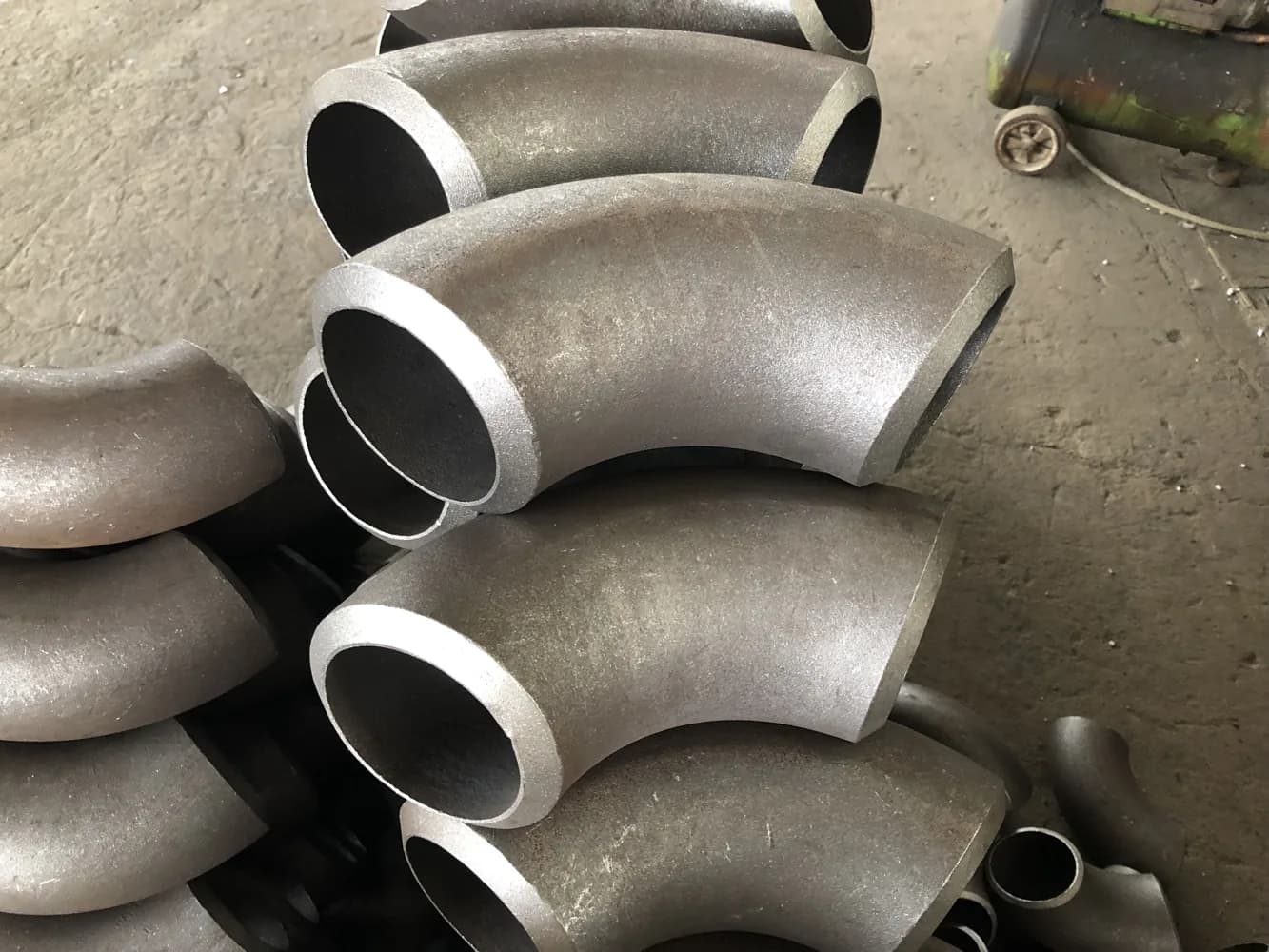
When You Need WPL6 Instead of WPB
ASTM A234 WPB covers carbon-steel fittings for elevated-temperature service. Once the design temperature drops below the freezing point of water, plain WPB stops being adequate — carbon steel becomes brittle.
ASTM A420 WPL6 is the standard low-temperature carbon-steel grade for buttweld fittings:
- Test temperature: -50 °F (-45 °C)
- Material condition: normalised; A420 also permits normalised + tempered, annealed, or quenched + tempered
- Typical service: ammonia, propane, ethylene, refrigeration loops, LPG terminals, low-temperature gas processing
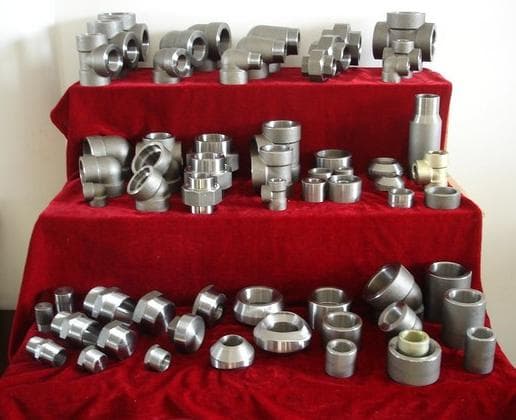
If your project temperature is below -45 °C, you move to WPL3, WPL8, WPL9 or stainless / 9% Ni grades — pick by the lowest service temperature, not the average.
What the Standard Actually Requires
For each heat of WPL6, ASTM A420 requires Charpy V-notch impact testing on a set of 3 specimens at -50 °F (-45 °C):
| Acceptance criterion | Value |
|---|---|
| Average of 3 specimens (set) | Required to meet the spec minimum |
| Single specimen minimum (no retest) | Required as the lower bound |
Specifically the test reports:
- Absorbed energy (ft·lbf or J)
- Lateral expansion (mils or mm)
- Percentage of shear fracture surface
If the average of the 3 specimens fails, retest is allowed under controlled conditions per the standard. If even one single specimen falls below the lower bound, the heat is rejected.
What to Check on the MTC
For WPL6 fittings the mill test certificate must include all of the WPB chemistry items plus the impact-test block:
- Test temperature explicitly stated (-50 °F or -45 °C)
- All 3 specimen energy values + average
- Lateral expansion values
- Fracture appearance (% shear)
- Notch type: Type A standard 10 × 10 × 55 mm V-notch
If the MTC shows "tested at -29 °C" (the typical WPL3 temperature) and the certificate is stamped "WPL6", reject — the test temperature must match the grade.
Common Issues at Inspection
- Sub-size specimens: 7.5 × 10 × 55 mm or smaller is permitted only when the wall thickness physically does not allow a full 10 × 10 specimen — the energy values must be adjusted per the standard. Many MTCs forget the adjustment.
- "At room temperature" Charpy: worthless for WPL6. The whole point of the grade is the low-temp performance — the test temperature must be -50 °F.
- Single-specimen test: the standard requires 3 specimens (a "set"). One value alone is non-conforming.
- Mother-material MTC missing the impact block: for processed fittings (elbows, tees, reducers) the mother pipe must also have been impact-tested. Cross-check.
Practical Buying Checklist
- [ ] Confirm design minimum temperature is between -45 °C and 0 °C (otherwise WPL6 may not be suitable)
- [ ] PO calls out "ASTM A420 WPL6, normalised, Charpy V-notch impact test at -50 °F (-45 °C), average of 3 specimens"
- [ ] PO requires impact test on both the finished fitting and the mother material
- [ ] MTC type is EN 10204 3.1 minimum; specify 3.2 (independent inspector) for PED Cat IV / sour service / subsea
- [ ] Material marking includes "WPL6" on the body, not just on a sticker
This article references the public ASTM A420 standard. The latest published edition takes precedence for any project specification.
Related Products
For physical supply of the specs discussed above, refer to the relevant Hebei Haihao product categories:
Or browse the full product catalogue and filter by ASTM / ASME / EN / GB standards, material grades, and size ranges.
Further Reading
Next Steps
- This article is a procurement reference; all standard numbers, chemistry limits, and process parameters defer to the latest published edition
- For project RFQs, submit your specs via the inquiry form; we respond within 4 business hours
- Factory certifications and inspection capability are listed on the certificates page
Need a quote for the products mentioned in this article?
Submit your specs and our pressure piping team will respond within one business day.
Send RFQRelated reading
TechnicalNDT for Pipe Fittings: PT vs MT vs UT vs RT Guide
Four common NDT methods are used on buttweld fittings and forged flanges. Each catches different defects — pick the wrong one and you ship the flaw.
Technical