Introduction
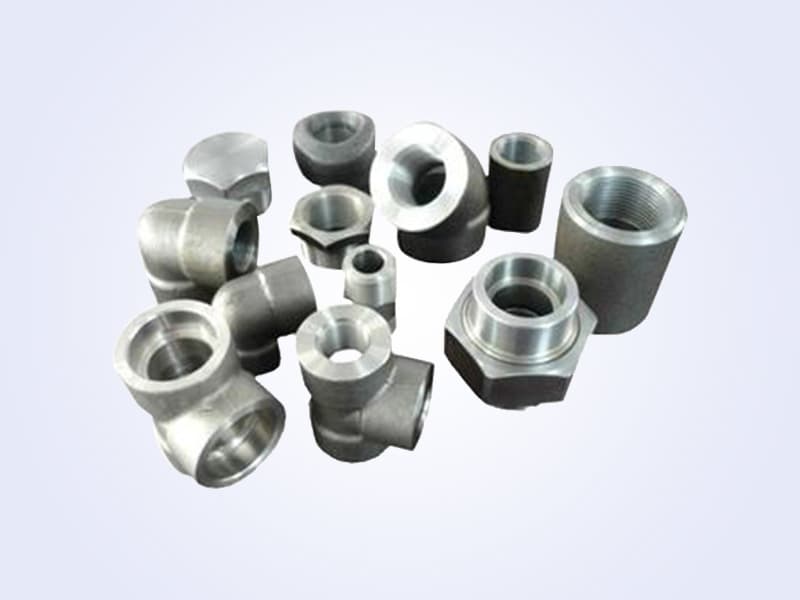
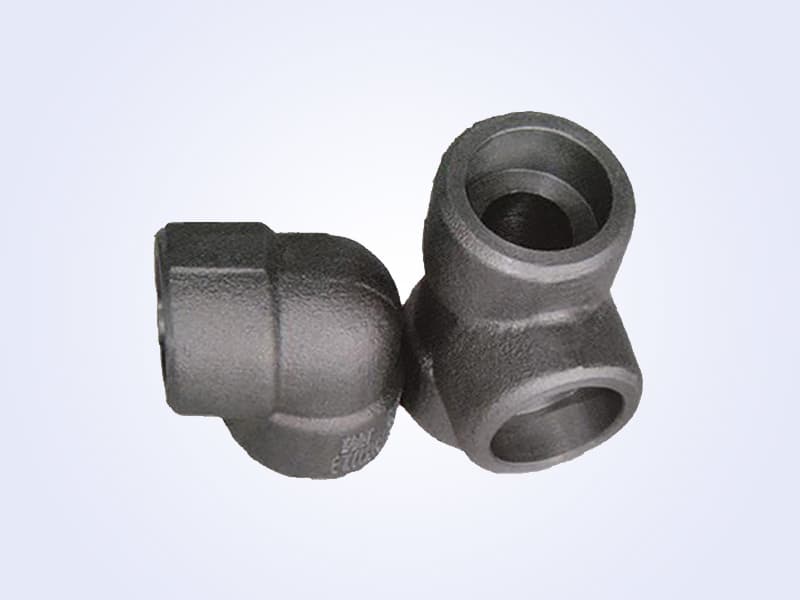
Socket-weld and threaded forged fittings are widely used in pressure piping systems. When sourcing these components, two standards appear frequently: ASME B16.11 for dimensions and ratings, and ASTM A105 for carbon steel material. They serve different purposes, and a correct purchase specification must identify both. This guide explains what each document covers, why you must not rely on one alone, and what to check during RFQ and inspection.
ASME B16.11: The Dimensional and Rating Standard
ASME B16.11, "Forged Fittings, Socket-Welding and Threaded," is the go-to dimensional standard for these fittings. It covers ratings, dimensions, tolerances, marking, and material-related requirements. Fittings are designated as Class 2000, 3000, and 6000 for threaded ends, and Class 3000, 6000, and 9000 for socket-weld ends. The standard is intended to be used in conjunction with other ASME B16 series standards, the ASME Boiler and Pressure Vessel Code, and the ASME B31 Piping Codes.
This means B16.11 gives you the physical envelope — socket bore dimensions, face-to-face dimensions, wall thickness, tolerances — but it does not select the material grade. It also does not define the service conditions or the design basis. Those come from the piping code and the material specification. When you write an RFQ, B16.11 alone is insufficient.
ASTM A105: The Material Specification
ASTM A105/A105M covers forged carbon steel piping components for ambient- and higher-temperature service in pressure systems. It includes flanges, fittings, valves, and similar parts, whether ordered to purchaser dimensions or to dimensional standards like MSS, ASME, and API. The specification limits forgings to a maximum weight of 10,000 lb (4540 kg). Larger forgings must follow a different specification, such as A266/A266M.
A105 establishes chemical composition requirements — carbon, manganese, phosphorus, sulfur, silicon, copper, nickel, chromium, molybdenum, and vanadium — along with heat treatment (annealing, normalizing, tempering, or quenching). Mechanical tests include tensile, hardness, and hydrostatic when required. The spec also gives guidelines for retreatment, repair by welding, and product marking.
A105 does not define dimensions. It defines the material. Therefore, using A105 only in a purchase order will not give the supplier enough information about the fitting size or class.
Purchase Specification: What to List
Because B16.11 and A105 are complementary, a proper purchase specification should identify both, along with the project piping code and service conditions. At a minimum, include:
- Fitting type and end type (e.g., socket-weld coupling, half coupling, cap)
- Size and class (e.g., 1/2" NPS, Class 3000 socket-weld)
- Dimensional standard: ASME B16.11
- Material standard and grade: ASTM A105 (if carbon steel is appropriate)
- Applicable piping code: ASME B31.3, B31.1, or other project code
- Service conditions (temperature, pressure, fluid) — these determine whether A105 is suitable
- Any supplementary testing or inspection requirements (e.g., hydrostatic testing, hardness testing, third-party inspection)
Never lose sight of the fact that the piping code and the material grade are separate inputs. Confirm them with the project design specification before ordering.
Dimensional Checks During Inspection
When inspecting socket-weld fittings, focus on dimensions defined in ASME B16.11. Key checks include socket bore diameter, socket depth, wall thickness, and overall lengths. Use calibrated instruments and compare against the tables in the latest edition of B16.11. Verify that the fitting is the correct end type — socket-weld, not threaded — and that the class is appropriate for the system pressure.
Marking is part of B16.11 and A105. Check that the marks are legible and match the order: manufacturer identification, pressure class, and material designation. If the marking is incomplete or inconsistent, reject the fitting and request clarification. Inaccurate dimensions or markings can lead to weld defects and early service failures.
Material Verification and Documentation
For ASTM A105 material, verify the chemistry and mechanical properties through the mill test certificate (MTC). The MTC should show the heat number, heat treatment, and the results of tension and hardness tests. If hydrostatic testing is required by the purchase order or the applicable code, confirm that it was performed and documented.
Check that the chemical composition meets A105 limits. If the MTC is missing data or appears inconsistent, do not accept the material without additional testing. Also verify that the forging weight does not exceed 10,000 lb (4540 kg) — larger components fall outside A105. If your fitting is heavier, the supplier should have used a different standard, and you must review the specification accordingly.
Common Procurement Risks
- Relying on B16.11 alone — B16.11 does not select the material. A project that specifies only "ASME B16.11, Class 3000 socket-weld" leaves the material grade open. You must add the material specification (e.g., ASTM A105) and the piping code.
- Confusing threaded and socket-weld classes — B16.11 gives different ratings for each end type. A Class 3000 threaded fitting is not the same as a Class 3000 socket-weld fitting. Specify the end type explicitly.
- Assuming B16.11 provides design-code acceptance — B16.11 is meant to be used with the B31 Piping Codes and the Boiler and Pressure Vessel Code. The project design code determines whether the fitting is acceptable for the service.
- Ignoring weight limits — A105 has a maximum forging weight. If a larger forging is needed, A266 or another specification applies. Check your part size against the limit.
- Accepting unclear markings — Marking is a required part of both B16.11 and A105. Incomplete or illegible markings are grounds for rejection.
RFQ Inputs for Socket-Weld Fittings
To get an accurate quotation, provide these details:
- Quantity, size (NPS), and fitting type (coupling, cap, half-coupling, etc.)
- End type (socket-weld) and class (3000, 6000, or 9000)
- Dimensional standard: ASME B16.11
- Material standard and grade: ASTM A105 or other specified grade
- Project piping code and service designation (e.g., ASME B31.3)
- Required documentation: MTC, inspection certificates, third-party inspection
- Marking requirements (if project-specific)
- Delivery and packaging requirements
If any detail is missing, ask the supplier to confirm the standard edition and the applicable class. Do not assume a common brand name or industry shorthand covers your requirement.
Final Checks Before Approval
Before accepting delivery, cross-check the MTC, physical dimensions, and markings against the purchase order. Verify that the fitting class matches the system pressure rating and that the material grade is correct for the service temperature. If the project requires additional test evidence, confirm that it was performed and documented.
When you need a reliable source for forged socket-weld fittings, review our product range and send us your specification — you can request a quotation with the exact details. Getting the dimensions and material right at the procurement stage saves time, cost, and safety risks downstream.
Sources
- https://www.asme.org/codes-standards/find-codes-standards/b16-11-forged-fittings-socket-welding-threaded
- https://store.astm.org/a0105_a0105m-26.html
Need a quote for the products mentioned in this article?
Submit your specs and our pressure piping team will respond within one business day.
Send RFQRelated reading
 Technical
Grain Size Verification for Forged Stainless Fittings
Grain size testing under ASTM A182 is mandatory only for certain grades. Learn when ASTM E112 applies, which methods are used, and what buyers must verify before accepting a fitting.
Technical