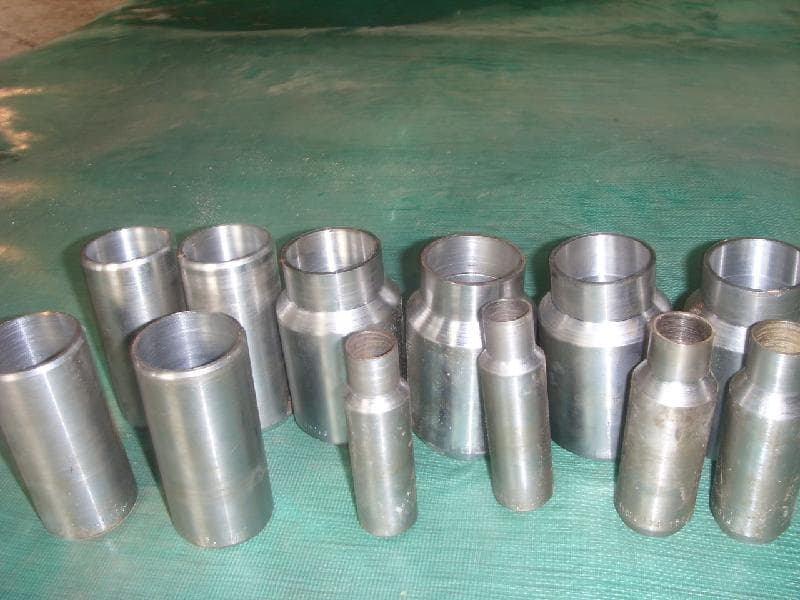
Why this matters
A mismatched weld bevel costs more than the fitting. Field welders cannot lay a clean root pass when bevel angle, root face or internal taper drift outside ASME B16.25 tolerance — and rework on installed pipework is expensive. ASME B16.25, "Buttwelding Ends," defines the geometry that every fitting and pipe end must meet so that downstream welding goes to plan. This guide explains the bevel preparation per ASME B16.25 inspectors should check, including for matching wall thicknesses and heavy-wall fittings.
Getting bevel preparation per ASME B16.25 right at the mill prevents every weld-prep grinder hour at site.
Field-by-field bevel geometry
1. Standard bevel angle. For wall thickness up to 22 mm (the most common case), ASME B16.25 specifies a single-V bevel of 37.5° ± 2.5° measured from the pipe axis perpendicular. The included angle is therefore 75°.
2. Root face. A flat land of 1.6 ± 0.8 mm at the inside diameter, sized to support the root pass without excessive penetration. Too short a root face causes burn-through; too long blocks fusion.
3. Tip angle (compound bevel). For heavier walls, B16.25 introduces a compound bevel: an upper 37.5° section transitions to a 10° ± 2.5° tip angle to reduce weld metal volume. The transition height is dimensioned per the wall thickness table.
4. Internal taper for unequal wall thickness. When fitting wall is more than 1.5 mm greater than mating pipe wall, B16.25 requires an internal taper, typically 1:4 maximum slope (≤ 14°), to align internal diameters at the root.
5. External taper. When the OD differs, an external taper similarly limited to 1:4 may be applied, again to keep the welder's root geometry consistent.
6. Backing options. B16.25 covers preparations for joints with no backing ring, split or noncontinuous backing rings, solid or continuous backing rings, consumable insert rings, and GTAW root passes. Each backing option has its own root face / land geometry.
7. Surface finish. Bevel surface roughness of approximately 12.5 µm Ra (500 µin) or better is the practical mill standard so the welder can see fusion clearly.
Inspector measurement points
Use a bevel gauge or a calibrated profile template. Measure on at least four points around the circumference (0°, 90°, 180°, 270°). Record:
- Angle (target 37.5° ± 2.5°)
- Root face thickness (target 1.6 ± 0.8 mm)
- Internal/external taper presence and slope where applicable
- Out-of-roundness at the bevel face
- Visual: no cracks, gouges, or scale on the bevel surface
Common buyer mistakes
- Specifying "standard bevel" without naming B16.25 — vendors then default to whatever is on the lathe.
- Forgetting to specify compound bevel for heavy wall (e.g., XXS / SCH 160 fittings).
- Painting over bevels with anti-rust before inspection — the paint hides scarfs and cracks.
- Ordering long-radius elbows from one source and pipe from another without matching ID — the welder finds the mismatch at fit-up.
- Not requesting protective bevel caps; transit damage is common.
Buyer checklist
- [ ] Bevel callout cites ASME B16.25 with edition year (2017 or 2022)
- [ ] Standard 37.5° ± 2.5° bevel for wall ≤ 22 mm
- [ ] Compound bevel (37.5° + 10° tip) for heavy wall
- [ ] Root face 1.6 ± 0.8 mm reported
- [ ] Internal taper provided when wall mismatch > 1.5 mm
- [ ] Surface free of cracks, scale, and paint
- [ ] Bevel caps fitted for shipment
- [ ] Dimensional report attached to MTC
Sample PO clause
"All butt-weld ends prepared per ASME B16.25-2017. Standard bevel 37.5° ± 2.5° with root face 1.6 ± 0.8 mm for wall thickness ≤ 22 mm; compound bevel with 10° ± 2.5° tip angle for heavier walls. Internal taper at 1:4 maximum where wall thickness exceeds matching pipe by more than 1.5 mm. Bevel surface free of paint, scale and visual defects. Plastic bevel protectors fitted prior to packing."
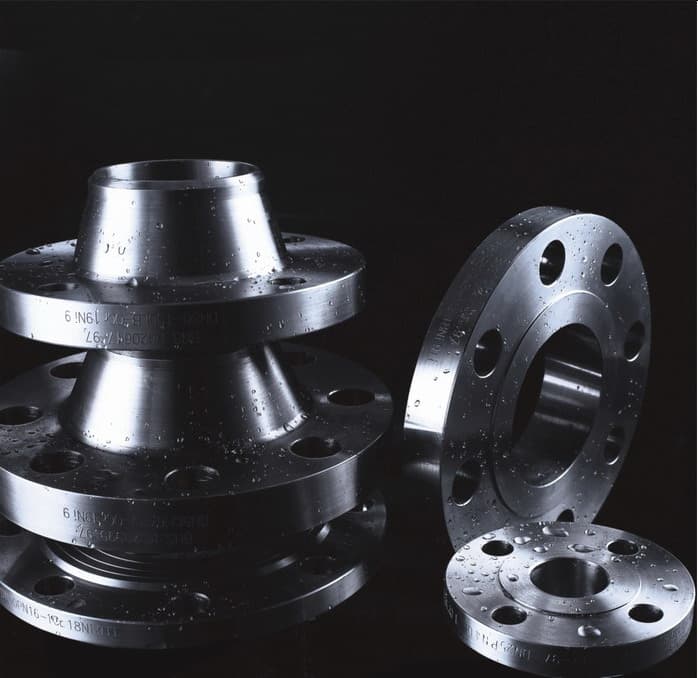
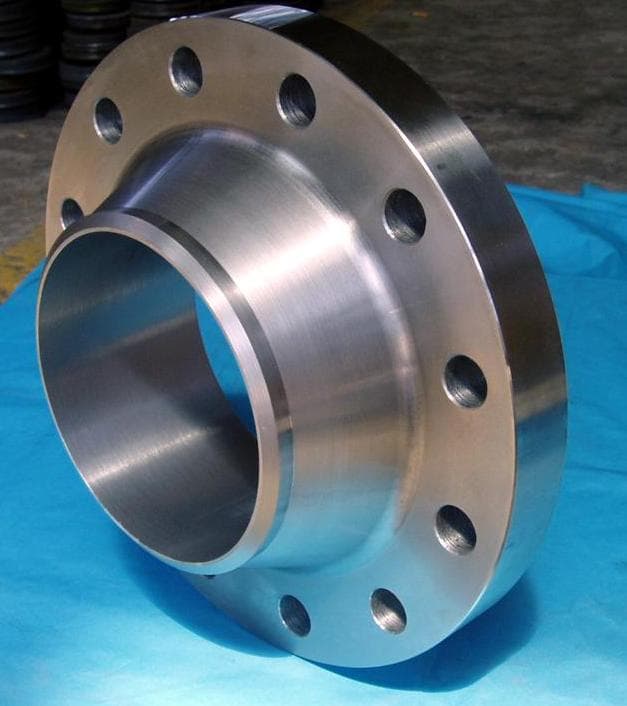
Our seamless butt-welding pipe fittings ship with B16.25 dimensional reports cross-referenced to each piece. For matching forged flanges with butt-weld neck the same B16.25 callout applies. Send mating pipe data via the inquiry desk or check sample dimensional reports in our certificates library.
Sources
- ASME B16.25 official scope: https://www.asme.org/codes-standards/find-codes-standards/b16-25-buttwelding-ends
- ASME B16.25-2017 reference PDF: https://emtco.ir/media/3hthesma/kupdf-net_asme-b1625-2017-buttwelding-ends.pdf
- B16.25 buttwelding ends summary (Haihao): https://www.haihaopiping.com/ansiasme-b16-25-buttwelding-ends.html
- ASME B16.25-2022 listing: https://www.asme.org/codes-standards/find-codes-standards/b16-25-buttwelding-ends/2022
- Buttwelding Ends study reference: https://studylib.net/doc/27404637/asme-b16.25-2022
Need a quote for the products mentioned in this article?
Submit your specs and our pressure piping team will respond within one business day.
Send RFQRelated reading
 Buyer guide
How to Review WPS, PQR and Welder Qualification Documents
A practical guide for EPC engineers and procurement managers on reviewing welding procedure specifications (WPS), procedure qualification records (PQR), and welder certificates, with key checks and common pitfalls.
 Buyer guide