Introduction
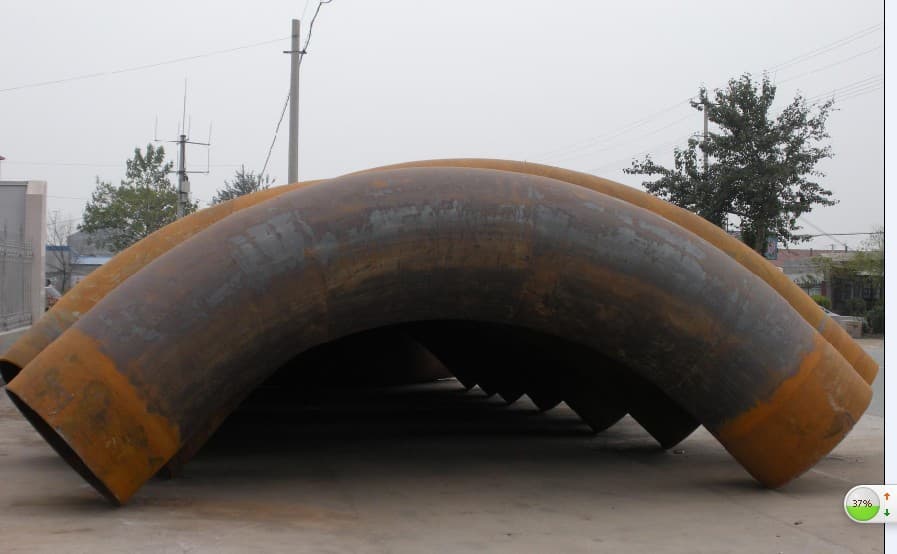
Induction bends are critical components in pipeline systems, allowing directional changes while maintaining flow efficiency and structural integrity. For EPC engineers and procurement managers, specifying these bends correctly is essential to avoid costly delays and field rework. This guide provides a comprehensive RFQ checklist based on ASME B16.49, the standard covering factory-made wrought steel buttwelding induction bends for transportation and distribution systems.
ASME B16.49 defines the design, material, manufacturing, testing, marking, and inspection requirements for these bends. It applies to carbon steel materials with controlled chemistry and mechanical properties, produced with or without tangents. Importantly, the standard is intended for transportation and distribution piping applications such as ASME B31.4 (liquid pipelines), B31.8 (gas transmission and distribution), and B31.11 (slurry pipelines). Process and power piping have different requirements and are not covered by this standard.
Key RFQ Inputs
When preparing an RFQ for induction bends, you must specify the following essential parameters:
- Code and edition: Clearly state ASME B16.49 and the specific edition (e.g., 2023).
- Outside diameter and wall thickness: Provide nominal values and tolerances.
- Bend angle: The degree of the bend (e.g., 45°, 90°).